
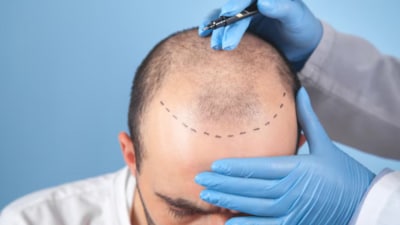

Body hair transplantation is a specialised form of hair restoration designed for cases where traditional scalp donor hair is no longer sufficient. Instead of using hair from the back or sides of the head, this technique—based on Follicular Unit Extraction (FUE)—utilises hair from areas like the beard or chest to improve scalp coverage.
It’s not a first-choice treatment. Rather, it’s a targeted solution for complex cases, such as advanced hair loss, previous transplant repairs, or when additional density is needed.
What Is a Body Hair Transplant?
A body hair transplant (BHT) involves extracting individual hair follicles from body areas—most commonly the beard or chest—and implanting them into thinning or bald regions of the scalp.
In standard procedures, scalp donor hair is used in the vast majority of cases. Body hair only comes into play when those traditional donor areas are exhausted or insufficient.
Most patients who undergo BHT have already had multiple procedures and are looking to improve density, especially in areas like the crown or mid-scalp. It’s rarely used for creating hairlines because body hair differs significantly in texture, thickness, and growth patterns compared to scalp hair.
Body Hair vs Scalp Hair Transplants: Key Differences
While both methods follow similar surgical principles, they differ in several important ways:
- Growth cycle: Body hair grows for a shorter duration, which can impact final length and appearance.
- Texture and thickness: Beard hair tends to be coarse and strong, while chest hair is finer and softer.
- Extraction complexity: Harvesting body hair is more delicate and time-consuming due to its angle and structure beneath the skin.
- Survival rates: Scalp hair generally offers more consistent and predictable results.
- Density potential: Scalp donor hair provides better overall coverage, while body hair is mainly used to enhance density.
Because of these factors, scalp hair remains the gold standard. Body hair acts as a supplementary option when needed.
How the Procedure Works
A body hair transplant follows the same three-step process as an FUE procedure:
- Extraction: Hair follicles are carefully removed from the donor area using a micro-punch tool.
- Recipient site creation: Tiny incisions are made in the scalp where the hair will be implanted.
- Implantation: The extracted grafts are placed into these areas with precision.
The entire process typically takes between 4 to 8 hours and is performed under local anaesthesia.
Because body hair follicles grow at sharper angles and behave differently, the procedure requires meticulous planning. The surgeon must carefully select donor hair, handle grafts delicately, and place them strategically to ensure natural-looking results.
Beard hair is often preferred due to its strength and thickness, while chest hair may be used for softer blending.
When Is Body Hair Used?
Body hair transplants are usually considered only in advanced cases, particularly when scalp donor reserves are depleted.
Common scenarios include:
- Severe hair loss with limited donor supply
- Previous transplants that have used up available scalp grafts
- Repair procedures requiring additional coverage
- Patients seeking to increase density in specific areas
It’s not suitable for everyone, and a thorough consultation is essential before proceeding.
Is It Permanent?
Yes—once transplanted hair follicles successfully establish themselves in the scalp, they typically remain permanent.
However, they retain their original characteristics. For example:
- Beard hair may stay thicker and coarser
- Chest hair may grow shorter and softer
So while the results are long-lasting, they may not perfectly match natural scalp hair in appearance.
Who Is an Ideal Candidate?
The best candidates are individuals with significant hair loss and limited scalp donor availability.
Men with advanced androgenetic alopecia often benefit the most. Among body donor sources, beard hair is usually the most reliable due to its strength and higher survival rate.
That said, candidates must also have sufficient body hair density to make the procedure viable.
Beard Hair vs Chest Hair: Which Is Better?
Beard hair is generally the preferred option because of its:
- Thicker shaft
- Stronger growth pattern
- Better ability to improve density
Chest hair, being finer and softer, is typically used to blend areas rather than build structure. In some cases, combining different types of body hair can create a more natural, balanced look.
What Results Can You Expect?
Results from a body hair transplant develop gradually:
- 0–3 months: Initial shedding of transplanted hair
- 3–4 months: New growth begins
- 12–18 months: Full results become visible
While the timeline is similar to standard FUE, body hair may take slightly longer to mature.
The final outcome depends on factors like donor hair quality, number of grafts, and surgical precision. BHT is most effective when used alongside scalp hair rather than as a standalone solution.
Risks and Limitations
Body hair transplantation is more complex than traditional procedures and comes with certain challenges:
- Lower and less predictable graft survival rates
- Differences in texture and growth patterns
- Risk of visible mismatch if not properly placed
- Limited availability of suitable donor hair
Success rates generally range between 50% and 80%, making surgeon expertise critical for achieving good results.
Final Thoughts
Body hair transplants offer a valuable option for patients who have limited scalp donor hair and still want to improve their appearance. While it’s not a universal solution, it can significantly enhance density and coverage when performed correctly.
The key lies in realistic expectations and choosing an experienced, specialised surgeon. With the right approach, BHT can be an effective way to restore confidence—even in the most challenging hair restoration cases.