
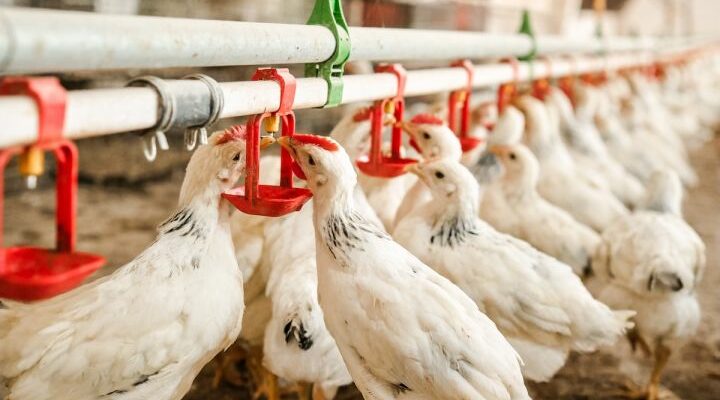
In poultry nutrition, feed gets most of the attention. Rations are carefully balanced down to the smallest nutrients. But one critical factor is often underestimated—water. Considering that water makes up over 70% of a bird’s body weight and is consumed in greater quantities than feed, ignoring its quality can quietly undermine performance, health, and profitability.
Water isn’t just about cleanliness—it’s a core nutritional component. Poor quality water can directly impact feed intake, digestion, and overall flock efficiency.
Why Water Matters More Than You Think
Water plays a central role in nearly every biological function in poultry. Unlike feed additives or supplements, it has no substitute.
Direct link to feed intake
Birds typically consume 1.6 to 2 times more water than feed by weight. If water intake drops—whether due to limited access or poor quality—feed consumption also declines. In some cases, poor water quality alone can reduce feed intake by up to 20%.
Supports digestion and metabolism
Water acts as the medium for digestion. It softens feed in the crop, aids nutrient absorption, and enables essential metabolic processes throughout the body.
Critical for temperature control
Poultry rely heavily on water to regulate body temperature. During heat stress, water intake increases significantly—often rising by around 6% for every 1°C increase between 20°C and 32°C. Without adequate, clean water, birds struggle to cope with heat, leading to stress and reduced productivity.
Hidden Risks in Water Quality
Water quality isn’t just about appearance. Even clear water can carry issues that affect bird health and system efficiency. The main risks fall into physical, chemical, and microbial categories.
Hardness (Calcium and Magnesium)
While these minerals can support nutrition, excess levels create scale buildup in pipelines. This reduces water flow and can interfere with the effectiveness of vaccines and medications delivered through water systems.
Iron contamination
High iron levels encourage biofilm formation inside water lines, leading to unpleasant odor and increased bacterial growth. In birds, excess iron can disrupt nutrient absorption and contribute to oxidative stress.
Nitrates and nitrites
These compounds often indicate organic contamination. Inside the bird’s body, nitrates can convert to nitrites, which reduce the blood’s ability to carry oxygen—impacting overall health and performance.
pH imbalance
Water that is too acidic or too alkaline can reduce consumption, weaken the effectiveness of disinfectants, and negatively affect immunity.
The Bigger Picture
Water quality directly influences key performance indicators like feed conversion, growth rate, and flock health. Yet it’s often treated as an afterthought rather than a controllable input.
The reality is simple: even the best feed program cannot compensate for poor water quality. When water intake suffers, everything else follows.
Final Thought
In poultry production, water isn’t just a supporting factor—it’s a foundation. Managing its quality with the same precision as feed can unlock better performance, healthier birds, and stronger economic outcomes.
Ignoring it may be easy—but the cost shows up where it matters most.