
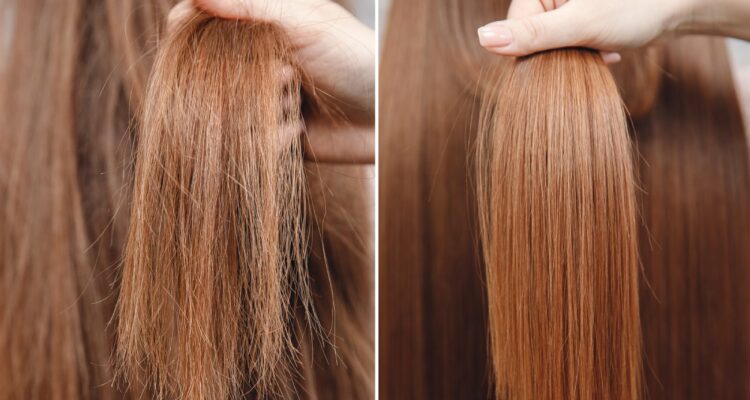

Many people who consider getting a keratin treatment wonder about one important question: can it cause hair loss? It’s a reasonable concern, especially when you’re investing both money and effort into improving your hair’s appearance. To understand the truth, it helps to look at how keratin treatments actually work and how they might affect hair health.
How Keratin Treatments Work
Keratin treatments are widely known for transforming frizzy or unruly hair into smooth, shiny strands. This process involves a semi-permanent chemical treatment designed to strengthen and smooth the hair shaft.
During the procedure, a formula containing hydrolyzed keratin proteins is applied to the hair. These proteins penetrate the hair’s cortex, filling gaps and smoothing uneven areas along the strand. Many formulas also contain formaldehyde or formaldehyde-releasing ingredients, which help lock the keratin into place.
After the solution is applied, the hair is sealed using high heat from a flat iron—often reaching temperatures around 450°F. This heat helps bond the treatment to the hair structure, leaving it smoother and easier to manage.
The results typically last between 8 and 12 weeks, depending on hair type, maintenance, and how often the hair is washed.
Can Keratin Treatments Cause Hair Loss?
In most cases, keratin treatments do not directly cause hair to fall out from the scalp. However, there are ways they can indirectly contribute to hair damage.
The process involves both chemical exposure and high heat, which can place stress on the hair. When treatments are performed too frequently or on already fragile hair, they may weaken the hair shaft over time.
Instead of hair falling out from the roots, the more common issue is breakage along the strands. Weakened hair can become brittle, making it easier for strands to snap during brushing, styling, or daily wear.
Real-Life Examples of Hair Stress After Treatments
Experiences vary depending on hair type, styling habits, and how often treatments are repeated.
For example, one individual named Tasha noticed that while her keratin treatment left her hair sleek and straight, she later experienced breakage along her part lines. As new hair began growing in, the contrast between treated hair and natural growth created tension near the roots.
This tension, combined with styling stress, contributed to weakened areas where the hair became more prone to breakage.
Comparing Keratin Treatments to Silk Presses
It’s also helpful to understand how keratin treatments differ from other smoothing methods, such as a silk press.
A silk press is a styling technique that temporarily straightens natural hair using heat tools like flat irons. Unlike keratin treatments, it does not chemically alter the hair’s structure.
However, silk presses still rely heavily on heat. When done repeatedly without proper care, they can also cause damage. For instance, someone like Nia, who frequently uses silk presses, might experience increased shedding or split ends due to consistent heat exposure.
Both treatments can affect hair health if not managed properly, though the mechanisms are slightly different.
What Experts Say
Hair specialists emphasize that keratin treatments are not suitable for every hair type.
According to Dr. Monique Williams, a trichologist and hair wellness expert, overusing smoothing treatments can lead to dryness and brittleness over time. This makes it important to evaluate the condition of your hair before undergoing the process.
Understanding your hair’s strength, moisture balance, and previous chemical treatments can help determine whether a keratin treatment is a safe option.
How to Protect Your Hair
If you’re considering a keratin treatment, there are a few steps you can take to reduce the risk of damage:
-
Consult with a professional stylist about your hair’s current condition
-
Avoid getting treatments too frequently
-
Use strengthening and moisturizing hair products
-
Limit excessive heat styling between treatments
-
Trim hair regularly to prevent split ends from spreading
Proper care and moderation can help maintain healthy hair while still enjoying the smoothing benefits of the treatment.
Final Thoughts
Keratin treatments are popular for a reason—they can dramatically reduce frizz and make hair more manageable. While they generally do not cause direct hair loss, the chemical process and high heat involved can weaken hair if overused.
By understanding how the treatment works and maintaining proper hair care, you can reduce the risk of breakage and keep your hair looking its best.
Before committing to a treatment, it’s always wise to speak with a trusted stylist and consider whether it aligns with your hair’s unique needs.