

Healthy hair plays an important role in personal appearance and confidence. However, many people experience different hair problems throughout their lives, including hair fall, dandruff, dryness, split ends, and scalp irritation. These issues can affect people of all ages and may develop due to genetics, lifestyle habits, environmental conditions, nutritional deficiencies, or improper hair care routines.
Understanding the causes and symptoms of common hair problems is the first step toward maintaining healthy hair. Although some conditions can be managed with simple changes in daily hair care, others may require professional diagnosis and treatment.
In this comprehensive guide, we will explore eight common hair problems, their possible causes, symptoms, and practical ways to manage them.
1. Hair Loss and Excessive Hair Fall
Hair loss is one of the most common hair concerns among men and women. Losing approximately 50 to 100 hairs daily is generally considered part of the normal hair growth cycle. However, excessive shedding, visible thinning, or bald patches may indicate an underlying problem.
Common Causes
Several factors can contribute to excessive hair fall, including:
- Genetic factors and hereditary hair loss.
- Hormonal changes.
- Physical or emotional stress.
- Nutritional deficiencies, particularly iron or protein deficiency.
- Thyroid disorders.
- Certain medications.
- Recent illness or significant weight loss.
How to Manage Hair Loss
Managing hair loss starts with identifying its underlying cause. Maintain a balanced diet containing adequate protein, iron, vitamins, and minerals. Avoid excessive heat styling, tight hairstyles, and harsh chemical treatments.
If hair loss continues or becomes noticeable, consult a dermatologist. Depending on the diagnosis, treatments such as topical minoxidil or other medical interventions may be recommended.
2. Dandruff and Flaky Scalp
Dandruff is a common scalp condition characterized by white or yellowish flakes and sometimes itching. It can be embarrassing, particularly when flakes become visible on clothing.
One common contributor to dandruff is an inflammatory reaction associated with Malassezia yeast, which naturally lives on the scalp. Oily skin, sensitivity to certain hair products, and scalp conditions can also contribute to flaking.
Common Symptoms
- White or yellowish scalp flakes.
- Itching and irritation.
- Oily or dry scalp.
- Visible flakes on the shoulders and hair.
How to Manage Dandruff
Using an anti-dandruff shampoo containing ingredients such as ketoconazole, zinc pyrithione, selenium sulfide, or salicylic acid may help control symptoms.
Follow the product instructions and allow medicated shampoo to remain on the scalp for the recommended duration before rinsing.
Avoid scratching the scalp aggressively, as this can increase irritation. If dandruff persists despite treatment or causes significant redness and inflammation, seek medical advice.
3. Dry and Brittle Hair
Dry hair occurs when the hair shaft does not retain enough moisture or natural oils. It often looks dull, feels rough, and becomes difficult to manage.
Environmental exposure, frequent washing, heat styling, chemical treatments, and excessive sun exposure can contribute to dryness.
Common Causes
- Frequent use of hair dryers and straighteners.
- Excessive shampooing.
- Chemical coloring and bleaching.
- Exposure to sunlight, wind, and pollution.
- Using unsuitable hair care products.
How to Improve Dry Hair
Choose a gentle shampoo and use a moisturizing conditioner after washing. A leave-in conditioner or suitable hair oil may also help reduce dryness and improve manageability.
Limit the use of heat styling tools and use a heat protectant when styling is necessary. Regular conditioning and gentle handling can help prevent additional damage.
4. Split Ends
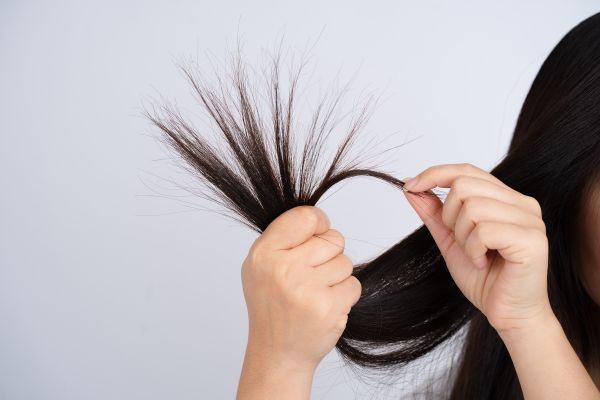
Split ends occur when the protective outer layer of the hair shaft becomes damaged, causing the hair strand to separate at its tip.
They are particularly common in long hair and among people who frequently use heat styling tools or chemical treatments.
Why Do Split Ends Develop?
Common contributing factors include:
- Excessive brushing and rough handling.
- Frequent blow-drying and straightening.
- Chemical coloring and bleaching.
- Environmental damage.
- Lack of proper conditioning.
- Mechanical friction from towels and clothing.
How to Prevent Split Ends
The most reliable way to remove existing split ends is to trim the damaged sections. Condition your hair regularly and avoid excessive heat exposure.
Use a wide-tooth comb to detangle wet hair gently. Avoid rubbing your hair aggressively with a towel after washing.
Although hair products can temporarily improve the appearance of damaged ends, they cannot permanently repair a split hair shaft.
5. Frizzy Hair
Frizzy hair occurs when individual strands become rough, unruly, or difficult to control. It is particularly noticeable in humid weather because hair can absorb moisture from the surrounding environment.
People with naturally curly, wavy, or dry hair may be more likely to experience frizz.
Common Causes
- High humidity.
- Dryness and lack of conditioning.
- Damaged hair cuticles.
- Excessive heat styling.
- Frequent chemical treatments.
- Rough brushing and towel drying.
How to Control Frizz
Use a moisturizing conditioner and consider applying a leave-in conditioning product to damp hair. Hair serums containing silicone-based ingredients can help smooth the hair surface and reduce frizz temporarily.
Avoid brushing dry curly hair excessively, as this can increase frizz. Microfiber towels or soft cotton T-shirts can also reduce friction during drying.
6. Oily Hair and Scalp
An oily scalp develops when sebaceous glands produce excess sebum. Sebum is the natural oil that helps protect the scalp and hair. However, excessive production can make hair look greasy and flat.
Some people naturally have oilier scalps, while hormonal changes, genetics, and certain hair care habits can influence oil production.
Common Symptoms
- Greasy hair shortly after washing.
- Flat and heavy-looking hair.
- Oily scalp.
- Increased buildup of styling products.
- Sometimes associated with dandruff.
How to Manage an Oily Scalp
Choose a shampoo suitable for oily hair and wash your scalp as frequently as needed. Some people benefit from daily washing, while others may need less frequent cleansing.
Apply conditioner mainly to the middle lengths and ends rather than directly to the scalp if it becomes greasy easily.
Avoid applying excessive amounts of heavy oils or styling products near the roots.
7. Itchy and Sensitive Scalp
An itchy scalp can develop for several reasons, ranging from simple dryness to inflammatory skin conditions. Persistent itching may interfere with daily activities and can sometimes lead to scratching-related irritation.
Possible Causes
Common causes of scalp itching include:
- Dry scalp.
- Dandruff and seborrheic dermatitis.
- Allergic reactions to hair products.
- Psoriasis.
- Eczema.
- Head lice.
- Fungal infections.
Ways to Reduce Scalp Irritation
Identify and stop using products that appear to trigger irritation. Choose gentle, fragrance-free hair care products if your scalp is sensitive.
Avoid scratching, as it can damage the skin and increase the risk of infection.
If itching is severe, persistent, or accompanied by sores, swelling, significant redness, or hair loss, consult a dermatologist for proper diagnosis and treatment.
8. Premature Greying of Hair
Grey hair develops when hair follicles gradually produce less melanin, the pigment responsible for natural hair color.
Although greying is a normal part of aging, some people notice grey or white strands at a relatively young age. This is commonly called premature greying.
Common Causes
- Genetic predisposition.
- Natural aging processes.
- Certain medical conditions.
- Vitamin B12 or iron deficiency in some cases.
- Thyroid-related disorders.
- Oxidative stress.
How to Manage Premature Greying
Genetics plays a significant role in determining when hair starts turning grey. There is currently no reliably proven method to reverse ordinary age-related greying.
However, maintaining a balanced diet, avoiding smoking, and addressing diagnosed nutritional deficiencies can support overall hair health.
If premature greying develops suddenly or is accompanied by other symptoms, consult a healthcare professional to investigate possible underlying causes.
Essential Tips for Maintaining Healthy Hair
While different hair problems require different approaches, following a consistent hair care routine can help maintain healthier hair and scalp conditions.
Here are some useful practices:
- Maintain a Balanced Diet: Include adequate protein, fruits, vegetables, healthy fats, and essential nutrients.
- Stay Hydrated: Drink sufficient water throughout the day to support overall health.
- Choose Suitable Hair Products: Select shampoos and conditioners according to your hair type and scalp condition.
- Limit Heat Styling: Reduce frequent exposure to high temperatures from straighteners and curling irons.
- Avoid Tight Hairstyles: Repeated tension from tight ponytails and braids can contribute to traction-related hair loss.
- Protect Hair from Environmental Damage: Consider suitable protection from excessive sunlight, pollution, and chlorine.
- Maintain Scalp Hygiene: Clean your scalp regularly to remove excess oil, sweat, and product buildup.
- Seek Professional Advice: Consult a dermatologist when hair problems persist or worsen.
When Should You Consult a Dermatologist?
Not every hair problem requires medical treatment. However, certain symptoms should not be ignored.
Consider consulting a dermatologist if you experience sudden or excessive hair loss, bald patches, persistent scalp itching, painful inflammation, scaling, or unexplained changes in hair texture.
A dermatologist can examine your scalp, review your medical history, and recommend appropriate tests or treatments based on the suspected condition.
Early diagnosis can help prevent certain hair and scalp problems from becoming more severe.
Conclusion
Understanding common hair problems is essential for maintaining healthy hair and preventing unnecessary damage. From hair loss and dandruff to dryness, frizz, and premature greying, each condition has different causes and management approaches.
Developing a suitable hair care routine, maintaining a balanced diet, avoiding damaging styling habits, and paying attention to scalp health can make a meaningful difference.
Most importantly, remember that hair problems are not always caused by poor hair care. Genetics, hormonal changes, nutritional deficiencies, and medical conditions can also play a role. If a problem persists, professional guidance is the best way to identify its cause and find an appropriate solution.