
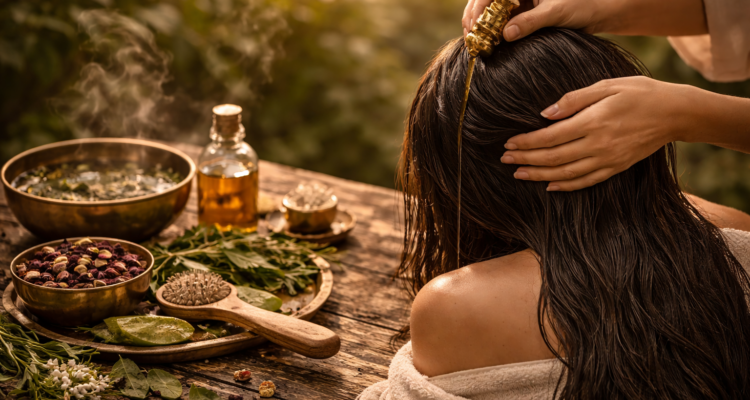
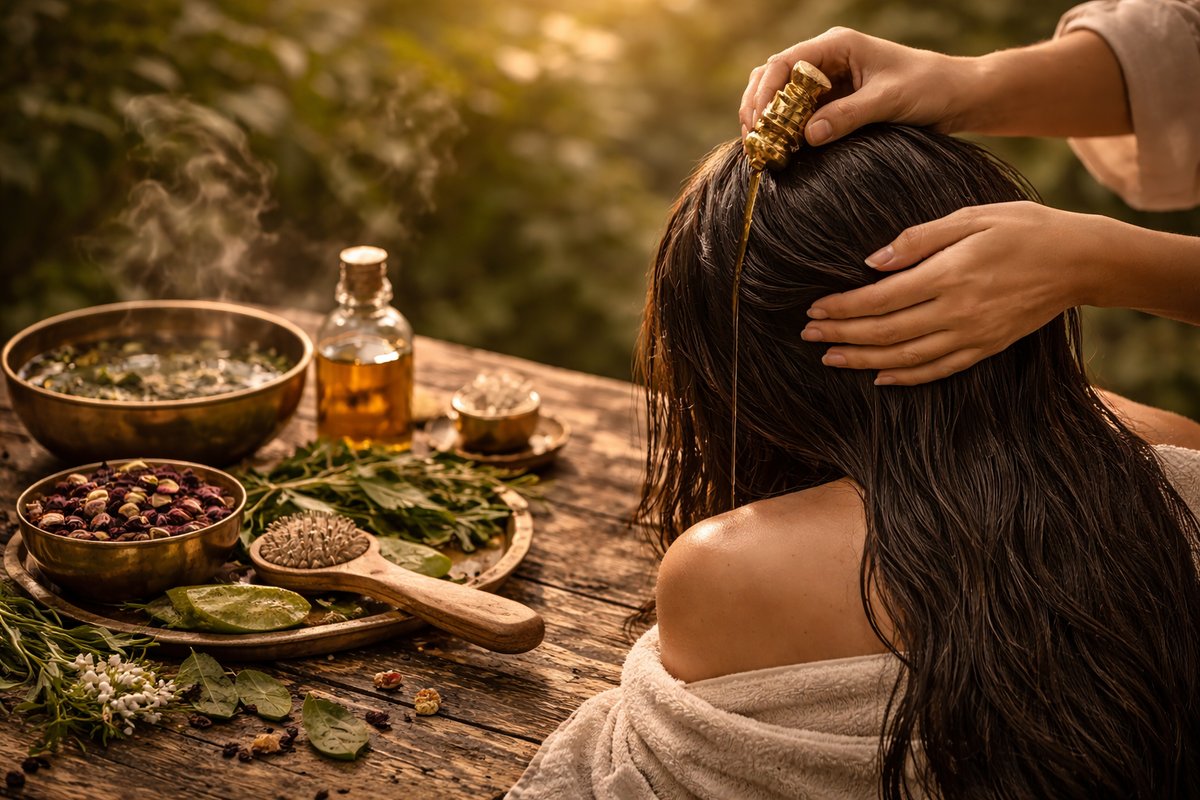
Ayurveda has a long history of using plant-based ingredients, oils, herbs, and daily routines as part of personal care. In modern haircare, many people are returning to these traditional practices because they are simple, accessible, and often focused on gentle scalp and hair maintenance.
However, Ayurvedic haircare should be approached thoughtfully. Traditional practices can complement a healthy hair routine, but not every herbal remedy is suitable for everyone, and traditional claims should not automatically be treated as scientifically proven facts.
What Does Ayurveda Say About Haircare?
Ayurvedic traditions generally view hair and scalp care as part of overall daily wellbeing. Practices may include regular scalp massage, oiling, cleansing with herbal ingredients, and maintaining lifestyle habits considered supportive of balance.
Traditional Ayurvedic approaches may also consider individual characteristics when selecting ingredients and routines. This is one reason why the same haircare practice may not work equally well for everyone.
In modern terms, many Ayurvedic haircare routines focus on keeping the scalp comfortable, reducing dryness, conditioning the hair, and minimizing unnecessary exposure to harsh products.
The Role of Hair Oil in Traditional Haircare
Hair oiling is perhaps one of the best-known Ayurvedic-inspired practices. Oils such as coconut, sesame, almond, and certain herbal-infused oils are commonly used for scalp massage and hair conditioning.
Applying oil to the hair can help reduce friction and make strands feel smoother. Some oils may also help limit moisture loss from the hair shaft.
A gentle scalp massage can make oiling feel relaxing and may temporarily improve the sensation of scalp comfort. However, excessive oiling or vigorous massage may not be appropriate for people with an oily scalp or certain scalp conditions.
Common Ayurvedic Ingredients for Hair
Traditional haircare practices use a wide variety of botanical ingredients. Some of the most familiar include amla, bhringraj, hibiscus, fenugreek, neem, and aloe vera.
Amla
Amla, also known as Indian gooseberry, is widely used in traditional Indian haircare. It is rich in vitamin C and other plant compounds and is commonly included in hair oils, powders, and masks.
Bhringraj
Bhringraj is another traditional Ayurvedic herb frequently found in hair oils and herbal formulations. It has a long history of use in Indian personal-care practices.
Hibiscus
Hibiscus leaves and flowers are sometimes incorporated into homemade hair masks. They can provide a conditioning experience and are often used alongside other botanical ingredients.
Fenugreek
Fenugreek seeds are commonly soaked, ground, and used in traditional hair masks. The resulting paste can provide a conditioning effect and may help hair feel softer.
Aloe Vera
Aloe vera gel is popular in natural haircare because of its lightweight, soothing feel. It can be used on the scalp or hair depending on the formulation and individual tolerance.
Can Ayurvedic Haircare Prevent Hair Loss?
This is an area where it is important to separate tradition from established evidence.
Some Ayurvedic ingredients have been studied for their potential effects on hair and scalp health, but evidence varies considerably between ingredients and products. There is not enough high-quality evidence to claim that traditional hair oils or herbal remedies can universally prevent or reverse hair loss.
Hair shedding can have many causes, including genetics, hormonal changes, nutritional deficiencies, stress, medications, and scalp conditions. A homemade herbal treatment may not address the underlying cause.
For persistent or sudden hair loss, identifying the cause is more important than simply changing hair products.
How to Use Ayurvedic Practices Safely
Natural does not automatically mean risk-free. Herbal ingredients can cause irritation or allergic reactions, particularly when concentrated.
Before applying a new homemade mixture to the scalp, consider testing a small amount on a limited area of skin. Avoid applying ingredients that cause burning, itching, redness, or swelling.
It is also important to use clean ingredients and containers when preparing homemade hair masks. Fresh mixtures should not be stored for long periods because contamination can occur.
People with existing scalp problems should be especially cautious about experimenting with multiple ingredients.
A Balanced Modern Haircare Routine
Ayurvedic practices can fit into a modern haircare routine without replacing basic hair hygiene.
A simple routine might include gentle cleansing according to the scalp’s needs, appropriate conditioning, careful detangling, protection from excessive heat, and occasional oiling if the hair responds well to it.
Choosing a routine based on hair texture and scalp condition is generally more useful than following a one-size-fits-all recipe.
What Does an Expert Approach Look Like?
An evidence-aware approach to Ayurveda means appreciating traditional knowledge while recognizing the limits of current research.
Rather than assuming that every traditional ingredient has a guaranteed benefit, consumers should look at the available evidence, ingredient quality, concentration, and individual tolerance.
It is also wise to avoid products that promise dramatic hair regrowth or claim to cure significant scalp problems without credible evidence.
Final Thoughts
Ayurvedic haircare offers a rich collection of traditional practices centered around oils, herbs, scalp massage, and gentle personal care. Ingredients such as amla, bhringraj, hibiscus, fenugreek, and aloe vera remain popular because they connect modern routines with centuries-old traditions.
The best approach is to use these practices realistically. They may support conditioning and scalp-care routines, but they should not be considered guaranteed treatments for hair loss or medical scalp conditions.
When traditional knowledge is combined with modern haircare principles and evidence-based expectations, Ayurveda can become a thoughtful part of a personalized haircare routine.