
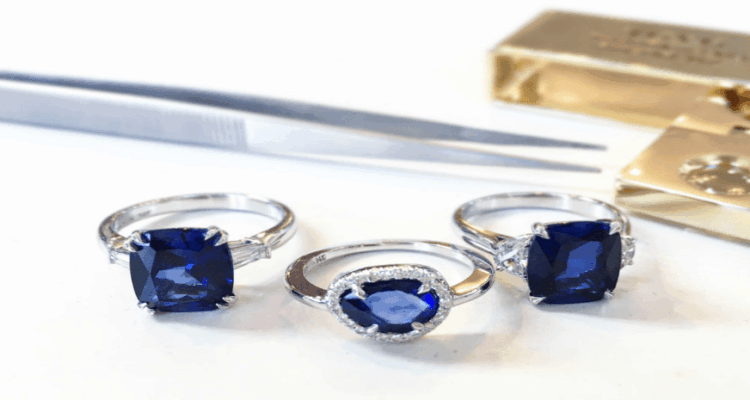

Something notable is unfolding in the world of fine jewellery. Brands that once relied solely on mined gemstones are now gradually introducing lab-grown alternatives into their collections. Among these, lab-grown sapphires are quickly emerging as a standout choice.
Why? The answer lies in their versatility—rich colour options, impressive durability, and pricing flexibility that opens new creative and commercial possibilities. What was once a niche interest has now become a strategic move, with many brands actively searching for reliable lab-grown sapphire jewellery manufacturers.
This guide breaks down what makes lab-grown sapphires so appealing, where the market is heading, and why sourcing hubs like Jaipur, India, are gaining global attention.
Why Brands Are Turning to Lab-Grown Sapphire Manufacturers
The shift toward lab-grown sapphires comes down to three core factors: cost, consistency, and ethics.
Natural sapphires—especially premium varieties like Kashmir blues or Burmese stones—are incredibly expensive and difficult to source consistently. Even mid-range stones vary widely in colour and quality, and ethical sourcing can add further complications.
Lab-grown sapphires eliminate many of these challenges:
- They are chemically and physically identical to natural sapphires
- Produced in controlled environments for consistent colour and clarity
- Free from concerns around mining practices
- Significantly more affordable per carat
For jewellery brands, this means the ability to create collections that look premium, perform well, and remain competitively priced.
There’s also a growing consumer shift to consider. Many buyers—especially younger ones—are actively seeking more transparent and ethical alternatives. Lab-grown sapphires allow brands to align with that mindset without compromising on quality.
Are Lab-Grown Sapphires Durable?
Absolutely.
Whether formed underground over millions of years or created in a lab within weeks, sapphire is corundum, ranking 9 on the Mohs hardness scale—second only to diamond.
This means:
- Excellent resistance to scratches and wear
- Ideal for everyday jewellery like rings
- Long-lasting performance comparable to natural stones
For brands, this durability makes lab-grown sapphires a reliable choice for both fine and everyday jewellery collections.
Exploring the Colour Spectrum
While blue sapphires are the most well-known, the material itself exists in nearly every colour—except red (which is classified as ruby).
Lab-grown production expands these possibilities even further. Manufacturers can create sapphires in:
- Pink, yellow, orange, and green
- Teal, purple, and white
- Rare tones like padparadscha (a pink-orange blend)
This opens up exciting creative opportunities for brands.
Want a perfectly matched birthstone collection?
A signature colour palette unique to your brand?
Or consistent shades across an entire campaign?
Lab-grown sapphires make all of this achievable with precision.
One of the biggest advantages here is colour consistency—a major benefit when designing collections or shooting product campaigns where uniformity matters.
Lab-Grown vs Natural: What’s the Real Difference?
The choice between natural and lab-grown sapphires depends largely on brand positioning.
- Natural sapphires offer rarity and heritage, making them ideal for high-end, collector-focused pieces.
- Lab-grown sapphires provide affordability, consistency, and scalability—perfect for modern, accessible jewellery lines.
For most brands, especially those focused on fashion or accessible luxury, lab-grown stones offer a stronger commercial advantage.
They allow for:
- Better margins or more competitive pricing
- Easier production planning
- Consistent inventory and matching stones
In short, they simplify both design and manufacturing.
The Role of Manufacturers in Custom Jewellery Design
A strong manufacturing partner does more than supply stones—they become part of the design process.
Experienced lab-grown sapphire manufacturers bring valuable insights, such as:
- Which cuts enhance colour depth
- How different settings affect light and appearance
- How metal choices influence the final look
For example, a deep blue sapphire may feel richer in yellow gold, while a pale pink stone may shine more in a minimal prong setting.
Modern manufacturing also includes advanced CAD (3D design) capabilities, allowing brands to preview designs before production begins. This reduces guesswork and ensures the final product aligns with the original vision.
Why Jaipur Is Leading the Market
Jaipur has long been a global hub for gemstones, and today it’s at the forefront of lab-grown sapphire production.
What sets it apart?
- Generations of expertise in stone cutting and polishing
- Advanced manufacturing infrastructure
- Competitive pricing without compromising quality
Manufacturers in Jaipur combine traditional craftsmanship with modern technology, making them highly attractive partners for global jewellery brands.
Final Thoughts
Lab-grown sapphires are no longer an alternative—they’re becoming a core part of modern jewellery design.
With their durability, colour versatility, ethical appeal, and cost efficiency, they offer brands a powerful way to innovate and scale.
As the category continues to grow, the brands that understand and embrace its potential early will be best positioned to stand out in an increasingly competitive market.